
Competitive SIGINT Software Choices That Actually Deliver
Updated: Jul 30
Why Competitive SIGINT Software Demands Rigorous Scrutiny
Selecting SIGINT software is not a comfort decision; it is a risk decision. The tools you approve directly affect mission success, ISR productivity, and whether electronic warfare assets deliver timely, accurate intelligence or waste valuable collection time. When collection windows are short and targets adapt quickly, an unsuitable software choice does not just reduce efficiency, it can limit operators' insight at the moment they need clarity.
SIGINT software should therefore be subjected to the same level of scrutiny already applied to platforms, sensors, and cryptographic systems. Marketing language about large signal counts, broad coverage, or distinctive product names can conceal gaps that only become apparent in operational use. The only meaningful measure of competitive SIGINT software is how completely and accurately it decodes real, current target signals. Catalogue size, legacy mode lists, and vague promises are not performance.

Common Failures in Today’s Competitive SIGINT Tools
Assessment of competing SIGINT software suites reveals recurring structural issues. The first is obsolete content presented as if it were operationally valuable. In many catalogues, a substantial portion of the listed modes are off the air; some have been retired for decades. They still appear in marketing material, but they provide no value to a SIGINT professional who needs results against active systems.
A second failure is incomplete coverage of operationally relevant signals. It is common to find:
Entire waveforms missing for declared modes
Parsers absent or only partially implemented
Key protocol variants not decoded at all
When a significant share of the listed modes lack real waveforms and parsers, the apparent breadth of coverage collapses at the exact point where operators expect answers. A third problem is relevance. Many tools populate their mode lists with amateur, hobbyist, or general‑interest radio signals. For professional SIGINT users, this is noise. It clutters interfaces, increases the risk of confusion for less experienced analysts, and does not support government, military, or intelligence missions.
The result is predictable. The SIGINT professional who sits down in front of such software quickly recognizes gaps in currency, completeness, and mission relevance, and may find that the way capabilities are presented does not match operational realities.
How Mislabeling and Redundancy Distort True Capability
Beyond obsolete and irrelevant content, there is a further issue that directly affects analytical integrity: how signals are named and counted. Some tools increase reported signal counts by listing the same mode under multiple names. The same signal may appear two, three, or more times under slightly different labels. On paper this can significantly inflate apparent coverage, without adding any new decoder capability.
There are also cases where signal names do not correspond to real manufacturer or model designations. Instead of using the nomenclature that appears in actual documentation and technical references, vendors create alternative labels for marketing or internal reasons. In operational use, this introduces several problems:
Tasking and targeting orders may not map cleanly to software labels
• Cross‑agency coordination becomes harder when teams are not using consistent technical terminology
• Training material and operational reporting can lose clarity
When analysts cannot be confident that a listed mode is what it claims to be, or they see multiple different names that may refer to the same signal, they start to question the software environment. Mislabeling and redundancy are not cosmetic issues; they can contribute to misallocation of scarce collection resources, misidentification of targets, and reduced confidence in digital SIGINT workflows.
What Modern, Mission‑Ready SIGINT Software Must Deliver
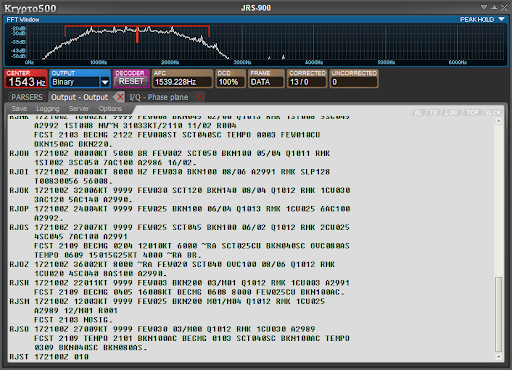
Stripped of marketing claims, modern SIGINT software must meet three tests: currency and relevance, technical completeness, and operational integration. Currency means that the mode list is aligned with what is actually on the air, particularly high‑priority target systems. It also means that the software includes extensive decoder coverage for contemporary signals that matter to current operations, and that new and emerging waveforms are integrated with minimal delay.
Technical completeness is about more than simply having a decoder name. Mission‑ready SIGINT software should provide:
Coverage for both narrowband and wideband digital signals
Deep protocol parsers, not just symbol recovery
Support for both COMINT and electronic warfare mission sets
For government, military, and intelligence users, these elements are essential. Operational integration is equally important. Analysts need tools, automation, and workflows that match real ISR and EW requirements, not hobbyist use cases. That includes coherent analysis displays, exportable results that integrate with other systems, and configurations designed for team environments.
Best Practices for Evaluating SIGINT Software in Procurement
Given the stakes, evaluation of competing SIGINT software during procurement or technical refresh cycles should be disciplined and evidence‑based. The first principle is clear: insist on proof against real signals. That can mean on‑air demonstrations, controlled lab exercises, or vetted recordings. The key is to observe advertised modes decoding real, current targets, with clear, repeatable results.
The mode list itself should be treated as an object of analysis. During technical evaluation, the team should:
Flag modes that are known to be off‑air or retired
Identify entries without full waveform and parser support
Note amateur and hobbyist signals that do not align with mission tasking
Look for duplicate or suspiciously similar names that suggest redundancy
When a competitor catalogue is audited in this way, patterns emerge quickly. It is also important to resist the tendency to equate a higher raw signal count with better coverage. Focus instead on how well the software addresses priority target sets, how accurate and consistent the nomenclature is, and how complete each decoder and parser implementation actually is.
Structured Checklists and Raising Evaluation Standards
To keep evaluations consistent, it is useful to work from structured checklists. A capability checklist might compare current modes against obsolete ones, verify waveform presence, assess parser depth, and track which high‑priority targets are fully covered. A data integrity checklist can examine naming discipline, documentation quality, redundancy in mode entries, and whether each signal can be traced back to real manufacturers and models. A lifecycle checklist should address update cadence, responsiveness to new or modified signals, training support, and the long‑term viability of the vendor.
Applied rigorously, this level of scrutiny makes warning signs evident. Catalogue inflation, large numbers of obsolete modes, amateur signals in professional tools, nonstandard nomenclature, and heavy redundancy are all indicators that warrant further technical investigation. For a detailed view of how a SIGINT software environment actually performs, reviewing comprehensive mode and decoder analyses is essential.
Before committing to any SIGINT software, insist on hard evidence, internal technical validation, and clear internal approval of any capability claims you intend to adopt or publish. Consistent with organizational policy, no external publication or endorsement of SIGINT software performance should occur without appropriate prior approval.
Maximize Mission Results With Purpose-Built SIGINT Tools
If you are ready to modernize your interception and analysis workflows, our SIGINT software is designed to integrate directly into your existing operations. At COMINT Consulting, we work with your team to understand mission requirements, signal environments, and deployment constraints so you get the tools you actually need. Reach out to contact us and we will walk you through options, timelines, and implementation details to move your project from planning to operational.


Comments